Michael S. Simone, Esq.
Managing Attorney

When a loved one becomes unable to make sound decisions due to age, illness, or disability, families face difficult choices about their care and well-being. Legal guardianship provides a structured framework for this protection, but it comes with significant responsibilities.
So, what is a legal guardian, and what responsibilities do they have?
For families facing these difficult circumstances, the responsibility extends far beyond paperwork—it fundamentally alters the relationship between guardian and ward, creating legal obligations that must be fulfilled with diligence and care.
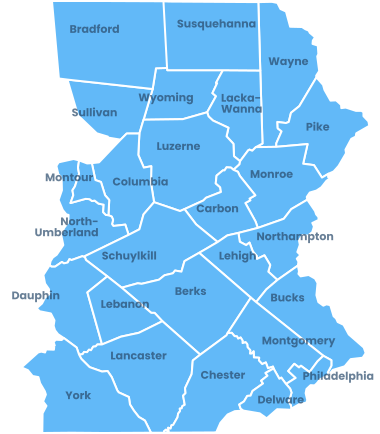
The Simone Law Firm assists families throughout New Jersey and Pennsylvania in addressing these complex matters.
A legal guardian is a person or agency appointed by a court to make decisions and act on behalf of another individual who cannot make or communicate responsible decisions about their personal care or finances. The person under guardianship is often called a “ward” or “incapacitated person.”
Guardianship in NJ may be necessary for:
The need for guardianship typically arises when no less restrictive alternatives are sufficient to protect the individual.
Guardianship can take several forms depending on the needs of the incapacitated person:
This type allows the guardian to make decisions about the ward’s:
This focuses on managing the ward’s financial matters, including:
This combines both person and estate guardianship, giving the guardian comprehensive authority over most aspects of the ward’s life.
This restricts the guardian’s powers to specific areas where the incapacitated person needs assistance, allowing them to retain decision-making rights in other areas.
Courts typically favor the least restrictive form of guardianship that meets the individual’s needs while preserving as much autonomy as possible.
Being appointed as a guardian carries significant legal and ethical duties that must be fulfilled with care and diligence.
The guardian must always act in the ward’s best interest, not for their own benefit or convenience. This includes considering the ward’s preferences when possible, even if they lack legal capacity.
Guardians must ensure the ward has:
When appointed as guardian of the estate, responsibilities include:
New Jersey requires guardians to file periodic reports with the court, which may include:
Certain actions require specific court approval, including:
Fulfilling these responsibilities requires ongoing attention and commitment to the ward’s changing needs and circumstances.
Despite their broad powers, guardians cannot:
Under certain circumstances, guardianship can be terminated, though this process typically requires court approval and evidence that the ward has regained capacity or that the guardianship is no longer necessary.
Establishing guardianship involves several legal steps designed to protect the rights of the allegedly incapacitated person.
Obtaining guardianship involves several steps:
The process is deliberately thorough to ensure that guardianship is only established when truly necessary and appropriate for the individual’s circumstances.
Legal guardianship is a serious responsibility that provides essential protection for vulnerable individuals. While the process can be complex, understanding the duties and limitations helps ensure proper care for those who cannot care for themselves.
If you have questions about establishing guardianship or need assistance with your guardianship duties, contact The Simone Law Firm for guidance tailored to your specific situation.
The guardianship process typically takes 3-6 months from filing to final judgment, depending on court schedules and case complexity.
Filing fees with service vary by county but generally range from $175-$400. Additional costs may include attorney fees, medical evaluations, and bond premiums if required.
Yes, family members generally maintain visitation rights unless the court specifically restricts access due to safety concerns or other compelling reasons.
Yes, co-guardians can be appointed. This arrangement is common between spouses or siblings who share responsibilities for an incapacitated family member.
The court can appoint a successor guardian. Guardians are encouraged to nominate potential successors in advance to ensure continuity of care.
Not necessarily. Guardianship can be modified or terminated if the ward regains capacity or if circumstances change significantly.
Family guardians often serve without compensation, but the court may authorize reasonable compensation from the ward’s estate, particularly for professional guardians.
A conservator is appointed for a person who is not incapacitated but needs assistance managing financial affairs, while guardianship applies to individuals who lack capacity.

Michael Simone is the Founder and Managing Partner of the Simone Law Firm, an estate planning law firm in Cinnaminson, NJ. With more than 20 years of experience in criminal defense, he has represented clients in a wide range of legal matters, including estate planning, elder law, probate, real estate, and business law.
Michael received his Juris Doctor from the Rutgers University School of Law and is a member of the New Jersey Bar Association.



The core values of our team distinguish our firm from all others. We know there are many choices in legal representation and we appreciate you considering our firm for your legal needs. Our firm has maintained great relationships with our clients with some lasting over twenty (20) years. Our satisfied clients demonstrate the dependable, trustworthy, honest and efficient representation that we provide in order to vigilantly protect and serve our clients’ legal needs.